
Ah my last newsletter sparked such a great discussion about credentials vs experience (thank you Anh Phuong Ta!) 🥰
Also based on her comments - I'm also trying out the 'newsletter' function instead of the 'email campaign' function on my Kajabi platform so that they can be viewed on the web are more easily shareable. Let's hope it works properly🤞🏻
So, the topic of AI is still on my mind...
Well as we know, the AI Revolution is upon us and the thing is that it offers a shortcut to avoid the mundane, boring, tedious, painful way of doing things.
This is so irresistable.
If you can avoid pain, why not? 😕
Well, in my experience - the ability to 'do things the easy way' does not encourage the problem-solving muscle to work, resulting in careless mistakes and work that is not well-thought through.
I love the 'Well-Architected' framework and approach to project delivery, because it is a compendium of wisdom and knowledge of experienced engineers and architects that has encourages critical thinking by asking thoughtful questions to understand what goes on behind the "It depends.." answer.
Context and nuance is critical.
And I think that those using AI in a non-intentional way will not be able to acquire the skill of discernment, of how to make good judgements.
Which is why I am leaning into this concept whole heartedly this year because I am concerned about
🍩our future generation who may not have the opportunity build and craft their character and skills through doing hard work
🍩the quality of project delivery and the work that we do because shortcuts are easy
Doing things the easy way robs us of the opportunity to learn how to master something.
And so - I am making it my mission to highlight the danger of complacency that the AI Revolution brings and emphasise why it's important to
1️⃣Do the Right Things
2️⃣For the Right Reasons
3️⃣The Right Way.
I used to be a data and solution architect in the Microsoft ecosystem, which is why when I pivoted into the project manager role in the Salesforce space I still retained that architect mindset.
In this newsletter, I want to talk about why it's important for the whole project team to have an achitect mindset.
If you like what you're reading here, please forward this to anyone you think would find useful and get them to subscribe! 😁
What does "thinking architecturally" actually mean?
When Salesforce talks about Well-Architected solutions, they're organised around three core capabilities:
- Trusted solutions protect stakeholders
- Easy solutions deliver value fast
- Adaptable solutions evolve with the business
I love to use Louise Lockie's TEA acronym to remember (matcha or boba??) 🍵🧋😁
The thing about delivering a robust and resilient project isn't just the architect's job. It's everyone's job.
The BA who saved us from disaster
Years ago - back in my Microsoft Dynamics days, I was on a project for an insurance client who wanted a classic CRM implementation - with lead management, opportunity tracking, that sort of thing.
Kevin was our amazing BA.
During a requirements workshop, the sales director said something like: "We need reps to see all customer interactions - emails, calls, meetings, everything in one place."
Rather than just writing down: "Requirement: 360-degree customer view." (which I have seen before 🙄... this was before the days of 'agile user stories') Kev asked some clarifying questions: "When you say 'all customer interactions,' do you mean interactions with your organisation? Or interactions between different parts of your organisation and the customer?"
Turns out, this client had separate divisions that weren't supposed to see each other's customer data.
Regulatory requirement.
But they were also territorial (omg the bickering and politicking! 😖)
If Kevin hadn't asked that question, if he hadn't been thinking about data security and compliance (two components of the Trusted pillar in the Salesforce Well-Architected framework) - we'd have built a system that put the client in legal jeopardy.
He wasn't an architect. He just had a solid architect mindset.
And that made such a big difference.
The five questions every team member should ask
So how do you think architecturally, even if "architect" isn't in your job title?
Here are five questions I've learned to ask on every project, regardless of my role:
🕸️1. What are the dependencies?
What else does this touch? What systems, processes, or teams are connected?
Example: You're gathering requirements for a new lead assignment process. If you're thinking like an architect, you ask: "Does this integrate with our marketing automation? What happens to leads that come from events vs. web forms? Who owns lead data once it's assigned?"
Hypothetical Agentforce scenario: Imagine you're deploying an agent to handle customer service enquiries. If you're thinking architecturally, you ask: "What knowledge sources does the agent need access to? What happens when the agent can't answer? How (and when) do we escalate to a human? What customer data should the agent not see?"
🥅2. What are the consequences if this fails?
What breaks? Who gets impacted? How bad is it?
Example: During projects, I (the PM ... an ex-DBA, an annoying combo for some project teams 😁) would ask questions like this about the data migration approach the team's taking. What would happen if the migration fails mid-process? For an in-flight project? Is roll-back possible? What are the contingencies?
💹3. What happens at scale?
Will this work when we have 10x the volume? 100x?
Example: I once took over a project building a ticketing system which worked beautifully... until we decided to do volume testing. It could not handle more than 10 concurrent ticket purchases before... CPU timeout! It would not have been able to do Glastonbury - 210,000 tickets sold under 40 minutes for the 2025 festival!! 😬
If the original developer had asked "What happens at scale?", it wouldn't have happened!
Hypothetical Agentforce scenario: Imagine you're building an agent for a growing e-commerce company. If you had your architect mindset on, you'd ask: "What happens during Black Friday when enquiry volume spikes? Can the agent handle 10,000 simultaneous conversations? What's our fallback?"
🙈4. Who shouldn't access this?
What's the security model? What could go wrong if the wrong person sees this data?
Example: On a charity project, we were building a donor management system. The fundraising team wanted to see everything about donors. But thinking architecturally meant asking: "Should volunteers see financial gift amounts? Should board members see donor health information?" The answer was no - and that shaped our entire security model.
💰5. What's the future cost of this decision?
Are we creating technical debt? Will this be easy to maintain? What happens when the original team moves on?
Example: I've seen too many projects where someone chose "quick and dirty" over "proper but slower" 😑- and two years later, the organisation is paying consultants like me to untangle the mess. Every shortcut has a price tag. Sometimes it's worth it. Often it's not.
If you know me, you know my feelings about tech debt.
Use only when necessary. And always have a pay-down plan.🫥
When architects want everyone thinking architecturally
The Salesforce Well-Architected framework breaks down into specific areas:
Under Trusted:
- Secure (organisational security, session security, data security)
- Compliant (legal adherence, ethical standards, accessibility)
- Reliable (availability, performance, scalability)
Under Easy:
- Intentional (strategy, maintainability, readability)
- Automated (efficiency, data integrity)
- Engaging (streamlined, helpful)
Under Adaptable:
- Resilient (application lifecycle management, incident response, continuity planning)
- Composable (separation of concerns, interoperability, packageability)
Now, I'm not suggesting your PM needs to become an expert in all of these. Though it wouldn't hurt!
In fact my flex here is that I won the London Architect Christmas Quiz 2025 even though I was the only PM in a room full of architects!! 😁
/end humble brag 🤭
But imagine if:
- Your PM habitually asked: "Are we building something that's maintainable? Do we have a continuity plan?" (Easy + Adaptable)
- Your BA always considered: "What's the security model? Are we meeting accessibility standards?" (Trusted)
- Your QA consistently tested for: "What happens under load? What are the failure modes?" (Trusted + Adaptable)
You'd catch problems early. You'd build better solutions. You'd have fewer 3am emergency calls.
And your architect wouldn't be the single point of failure for quality.
The test: would you stake your reputation on this?
Here's my personal litmus test for whether something is well-architected: Would I be comfortable with my name attached to this solution in two years' time?
If the answer is no - if I can already see the cracks, the shortcuts, the "we'll fix it later" bits - then we're not done.
And that's not just my job as a consultant to ask. That's everyone's job.
The PM should be asking: "Would I be proud of how this project was managed in two years?"
The BA should be asking: "Would these requirements still make sense in two years?"
The QA should be asking: "Would I trust this system in production in two years?"
So what now?
Next time you're in a requirements workshop, or a planning meeting, or reviewing a design document, try this:
Pick one of those five questions - just one - and ask it.
- What are the dependencies?
- What are the consequences if this fails?
- What happens at scale?
- Who shouldn't access this?
- What's the future cost of this decision?
You don't need to be an architect to ask these questions.
You just need to care about building solutions that are Trusted, Easy, and Adaptable.
The Salesforce Well-Architected programme gives us the framework.
But it's up to all of us - PMs, BAs, QAs, admins, developers, consultants - to actually use it.
Because here's the truth: architects can't architect in isolation.
Well-architected solutions require well-architected teams. 💪🏻
🍩What's happening in the #WorldOfPei 😁
ADC Foundation Course
Piyusha and myself are busy working on our Agent Deployment Consultant Foundation course and honestly, I'm properly excited about this one.
So we're weaving in Trailhead badges (Agentblazer Champion and Innovator) into technical project delivery with consulting implementation practices.
You get the technical training from Piyusha (MVP, Golden Hoodie, literally helped write the Trailhead content), plus my 30 years of consulting frameworks for discovery, stakeholder management, testing, and handover.
We wanted to create a complete knowledge set for agent deployment - not just the build, but the ROI justification, the business case, the whole delivery lifecycle.
We are launching in March.
Join the waitlist for early-bird pricing £100 discount locked in (you'll pay £299 instead of £399)
Last week at #ZenClub
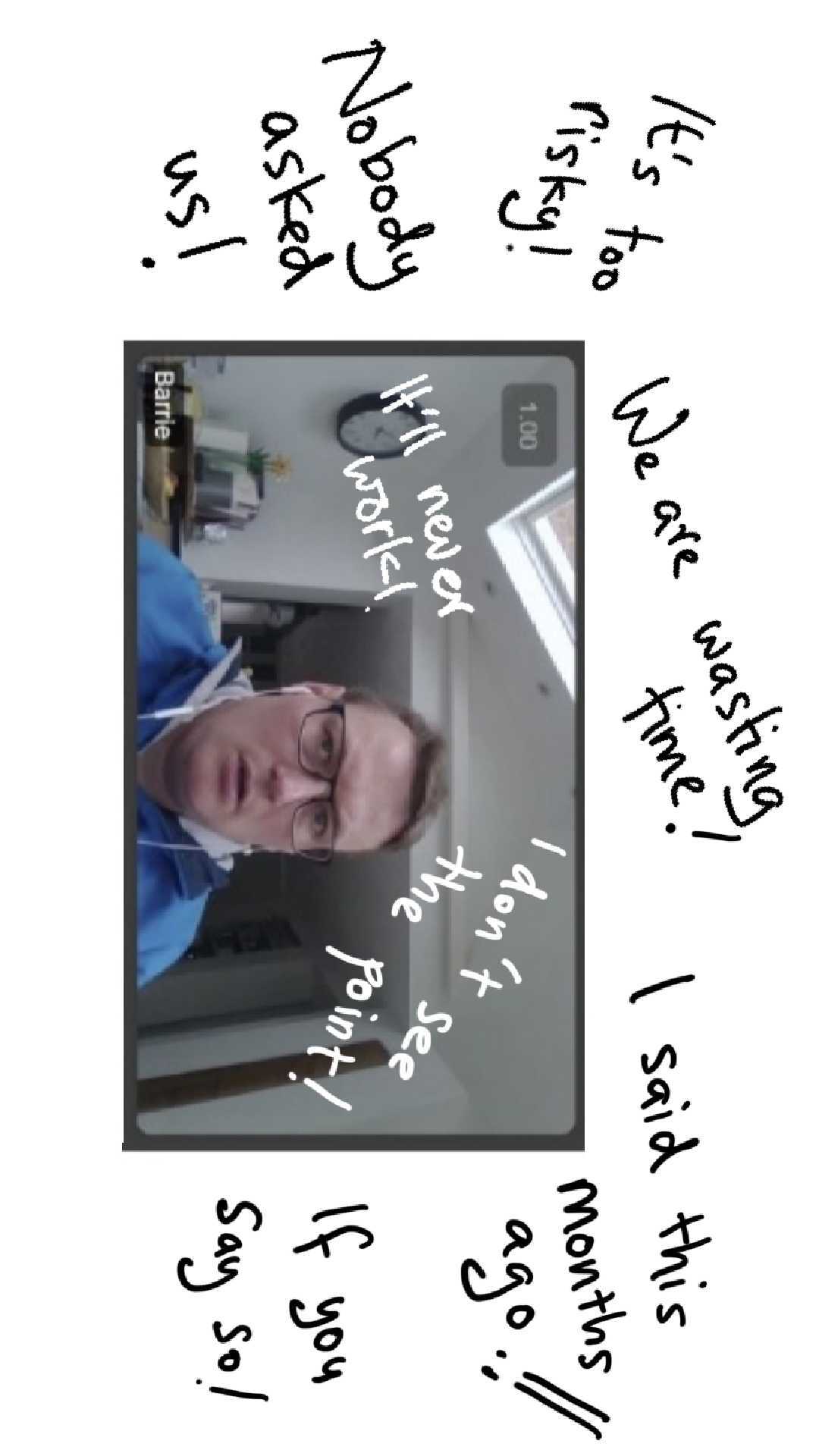
We role-played difficult conversations with challenging stakeholders. (See Barrie Robinson flexing his 'prickly angry' acting skills above 🤭)
Using advanced Active Listening techniques, we dissected where and how to de-escalate—including trigger words, better phrasing, and navigating power dynamics in group situations.
This week: Socratic Questioning to get to core issues. More role plays!
Thinking about joining?
Zen Club works because our members show up curious, empathetic, and ready to help each other get better. We practice on real scenarios, give honest feedback kindly, and lift each other up - even when the feedback is tough to hear.
If you're looking for a space to tear people down, prove you're the smartest in the room, or collect tips without contributing, this isn't it.
But if you genuinely want to elevate your skills AND help others do the same? We'd love to have you.
>>Join Zen Club - £129/month<<
What did you think of this newsletter? Hit reply and let me know what you think of the new format or content or anything else.
See you in the next issue!
x Pei 💜
ps. Know someone who'd love this newsletter land in their inbox as much as you do? Forward this their way and let them know they can subscribe here. The more the merrier! 🥰

Responses