
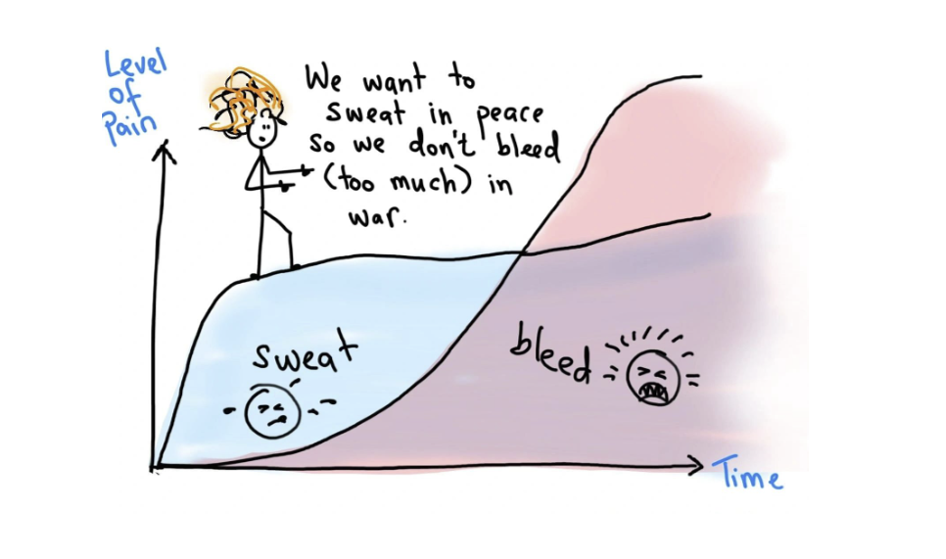
Re-work 'now' is better than re-work later. 🫤
Tech debt paid off earlier is almost always less costly and painful than if we wait.
Hi there,
If you tell me re-work, we can't be friends. 😐
I certainly do not love it.
But re-work I will have to do. 😭
I was talking to Piyusha about our ADC (Agent Deployment Consultant) course. You know, the one I've been talking about for months? The comprehensive foundations course covering everything from writing business case to gathering requirements to technical implementation?
We'd created:
- Entire course structure
- Video scripts
- Over 650 slides
- Weeks of work on the business case module alone
And then Piyusha told me that over the weekend she had outstanding response to Slack training and that her audience were really keen for more... resulting in her thinking about creating a Slack admin training course and I realised that our ADC course needed to be more modular.
This is important for those who might want to just take the consulting skills or Agentforce or Slack skills, or combine them into a more complete skillset.
My reactions? 😤😖😩😫😓🫤
Frustration.
And a whole plethora of other feelings.
Because I'd just invested all this time building something that now needed to be completely restructured.
And then I realised: This is EXACTLY what I am always talking about.
The Sunk Cost Trap
But this was what was going on in my head:
"But I've already done all this work..."
"The structure is already built..."
"If we change now, all that time was wasted..."
Classic sunk cost fallacy. 🤦🏻♀️(Here's a LinkedIn post I wrote)
When Piyusha and I originally planned the course, we had a plan, but we didn't know that she'd get so much interest in gaining Slack expertise.
We made the best decision with the information we had at the time.
But information changed.
Which means the decision should change too.
This sounds obvious.
But it's not what happens in real projects, is it?
When Organisations Ignore Changed Reality
Take HS2 - the high-speed rail project in the UK (Sigh - don't get me started... but I am going to start 😬).
The original business case was built on people needing to travel quickly between London and the North for business travel and commuting.
You know - Physical presence. 😐
Then COVID happened. 🦠
That meant everyone went remote and the meeting culture fundamentally changed.
The assumptions underlying the entire business case shifted.
But did they stop and reassess? 🤨
Not really.
Because billions had already been spent.
Because it would look like failure.
Because admitting you need to change course feels like admitting you were wrong.
Politics. Pride. Fear of looking wrong. All of it. 😬
I watched this happen with a client merger too. The business case was built on "combined customer base creates cross-sell opportunities." But six months in, they discovered the two customer bases were in completely different market segments.
What they should do is to pause the CRM integration.
Reassess the strategy.
But what actually happened? 🙄
They pushed ahead because "we've already committed to this timeline" and "we told the board this is what we're doing."
Eighteen months and a few million £ later, they had a beautifully built Salesforce org that nobody wanted to use. 💸😭
The business case had changed. They ignored it.
A good way to think about decisions
When I'm working with clients (or apparently, myself 😅), here's what I ask:
1. What was the original business case based on? The actual assumptions. What did we believe about users, processes, data, timeline, budget, organizational readiness?
2. What's changed since then? New information. Changed constraints. Different stakeholders. Shifted priorities. Be brutally honest here.
3. If we were making this decision today with what we now know, would we make the same choice? This is the hard one. Let go of sunk costs and look at the situation fresh.
4. What would need to be true for us to stop or change direction? Set your decision criteria in advance. Don't wait until stopping feels impossible.
What I'm Choosing
So here's what I did with the ADC course.
I acknowledged my frustration (because ignoring feelings doesn't make them go away).
Then I asked: If I were starting today, knowing what I know now, would I build one comprehensive course or modular components?
Answer: Modular. Absolutely modular. ✅
Because:
- It serves clients better
- It aligns with how Piyusha wants to grow her expertise
- It's what we're literally teaching people to do with their Salesforce solutions
So we're pivoting. I'm restructuring my consulting skills content to be standalone modules that can plug into Piyusha's technical courses - or work independently.
It means rework. It means launching later than planned.
But it's the right decision based on what we know NOW, not what we knew six months ago. 💜
We are still building the ADC Foundation course - it's just going to look a little different, more modular. If this is of interest to you, join our waitlist so you'll be among the first to know when it launches (and be eligible for our early bird pricing!)
What to Think about now
Take a look at your current projects, what you're currently doing and ask yourself:
🔍 Are we moving forward based on current information? Or based on decisions we made months ago that might not still be valid?
🔍 What's changed since we started?
🔍 If we were making this decision today, would we make the same choice?
🔍 What would need to be true for us to stop or pivot?
It's not fun.
Changing direction feels like admitting you were wrong.
It feels like wasted effort.
It feels like failure. 😔
But you know what actual failure looks like?
Delivering a technically awesome solution that nobody needs anymore because the world moved on while you were busy executing the old plan. 😬
Revisiting Business Case Is the Right Thing To Do
It's a living document and should always be revisited.
It's being willing to let new information change your mind.
It's having the courage to say "This was the right decision when we made it, but circumstances have changed."
The best consultants aren't the ones who stick to the plan no matter what.
They're the ones who adapt when reality shifts. 🎯
They're the ones who care more about delivering value than about being "right" about their original plan.
Be that consultant.
Question your roadmap. Acknowledge changed information. Make decisions based on what you know NOW.
Even when it means rework. 😖 (man how I hate re-work!)
Last Week at the #ZenClub

We continued analyzing the political situation of the messy merger - where you're in charge of implementing a solution in an unstable landscape!
We discussed Tom Bradley, the Sales Director who will lose his position after the 're-org' shakeout (but he doesn't know it yet) who has a lot of informal power and could really cause a lot of trouble if not handled properly.
What do we do?
How do we get him on our side but not alienate Priya (the Sales Director from the other merged company who is going to be his boss, but who thinks he's stuck in the past?) 😱
Ah that's what we do at #ZenClub, dissect and peel apart difficult situations that cause project failure. And most of us know that project failure is rarely because of technical incompetence, it's usually because of the humans in the loop. You can read comprehensive notes on Part 1 of the session on the Messy Merger here.
If this sounds interesting, you can learn more about Zenhao Academy (aka #ZenClub) here.
What are you building right now that might need reassessing? Hit reply and tell me - I read every email and I promise I won't judge you for changing your mind. 💜
x Pei
P.S. The full ADC course relaunch is now scheduled for later in the year as we restructure it - join the waitlist! But #ZenClub is still running every Friday where we practice these exact conversations - how to spot when business case has changed, how to have difficult stakeholder conversations about pivoting, how to make decisions when you're stuck between what you committed to and what you now know is right. £169/month for weekly coaching. Learn more here.
P.P.S. If this resonates with you, forward it along and get them to subscribe here. Sometimes people need permission to change their mind. Maybe you can give them that permission today. 🥰

Responses