

Getting people to change uphill can also be a pig! 🐷
Hi there,
It was a busy week (which is my excuse for this issue being late 😆) preparing for an RFP bid and subsequent presentation. Actually I was living the Successful Salesforce Projects 101 life, but from the partner point of view.
The client is a volunteer organisation with hundreds of thousands of volunteers assigned to branches across separate federated charities in different countries and regions.
Key topic for them wasn't the sexy things Salesforce could do - but on the change management aspect (which is of course the right thing to focus on!)
The question is - how can traditional change management approach work at that scale, and how is it different for a volunteer organisation?
Because most of what we know about change management and user adoption has been written for corporate environments.
Where there's a carrot 🥕. And a stick (or broccoli) 🥦.
Where your manager notices if you're logging your calls, and your performance review reflects it. ☹️
And the thing is... in a volunteer org?
None of that applies. 🫤
When a volunteer isn't happy with the system, they don't file a complaint. They don't send a passive-aggressive email.
They just... quietly stop turning up.
And the first signal you get is when the numbers drop.
By then, it's too late.
And this is something I know really well.
Sigh.
🍩 So what actually works?
I've been a Samaritan for 17 years - wow, that feels like a long time 😬.
I'm on the leadership team for my branch.
I run the training for new vols.
I chase the compliance.
And I know what it's like to be the volunteer staring at a system I haven't touched in three months trying to remember how to run a report.
Which means I know, in my bones, that you have to design for the least confident user. Not the average one.
The least confident user is the hairdresser in Yorkshire who became a Samaritan because she wants to help people - not because she loves logging into portals.
If she has to go into the system once every few months and can't remember how it works, she's not going to call the help desk.
She's going to ask another volunteer.
And if that doesn't work? She's going to quietly wonder whether this is all worth it.
That's your canary in the coal mine. 🐤
1️⃣ Always connect to the Mission.
The single most powerful thing you can do when rolling out change in a volunteer organisation is to connect every single change back to the mission.
Not "this new process will improve data quality."
"This means you spend more time on this important cause, which you care deeply about. And less time on admin."
The moment volunteers can see that the system helps them do the thing they actually care about, resistance drops.
Not entirely.
But meaningfully.
2️⃣ Champions are not optional
At Samaritans, we have one IT person for the whole organisation.
One.
He is a legend.
But he cannot be the first line of support for 200,000 people.
So we have champion networks like Trainers' WhatsApp groups.
Regional mentors.
Volunteers answering other volunteers' questions.
That network takes 80% of the load off the helpdesk before it even gets there.
And here's the really important that needs to happem to make it work: the champions have to feel heard and valued.
Otherwise, they won't do it because they're volunteers too.
Our core training for new Samaritans volunteers takes up 6 full Saturdays per cohort.
Three cohorts a year means I am out for 18 Saturdays running trainings and doing role-plays and providing meaningful detailed feedback.
(Luckily my wonderful family knows that this is important to me). 🫶🏻
But if I felt I was not valued, I'd wonder whether this was all worth it and go do something else.
3️⃣The right metric
In a corporate rollout, "first support requests" looks like a failure metric. More questions = more problems.
In a volunteer org, first support requests are a positive signal.
"How do I see who's coming to my next training session?" means someone is trying to use the system.
If they weren't, they'd just use their own spreadsheet and you'd never hear from them.
The silence is what you should be worried about.
I totally know this because (cough) I've returned to my spreadsheet when things got a little bit too difficult 😬
I know I know - I do the 'user' thing also, the thing I tell users not to do when I am on the other side running the project. 😝
4️⃣Start small. Start slow.
I said this in the room yesterday and I'll say it here: start with the least.
Don't build the golden perfect process on day one and expect everyone to comply. 🙅🏻♀️
Especially when there are so many branches and long standing volunteers doing things their own way, using their own system and swears that their approach is the best.
Trying to force system change top down, getting people to square into your round hole will be a recipe for failure.
So... how?
Build the most basic version that gives people something useful.
Then layer.
Then iterate. ♻️
The person who loved their 56-screen system isn't going to suddenly love your new 12-screen system just because you told them it's better.
But if you start with three screens that genuinely make their life easier?
You might just win them over.
Slowly slowly is the key. 🐢
5️⃣ Actively Listen
Underpinning everything is to show all these amazing volunteers who are giving up their time, their effort and emotional labour... is to show that you care. 💜🪷
You do that by listening.
Whether or not you take on their suggestions doesn't really matter.
What you need to do is to communicate what you've heard and you're planning to do with their feedback.
CLOSE THE LOOP.
That is really important, because it tells the volunteers that they matter. ❤️
Otherwise, they will just ... stop volunteering.
Last Week at the #ZenClub
Last Friday one of our members was being interviewed for a project manager role, and we discussed role plays and case study presentations that was part of the interview process.
Sometimes, especially for PM and leadership roles, the case study may have a 'gotcha' which isn't obvious - and part of the assessment is to see if you got the 'gotcha'.
One of which was a mistake in the brief, another is spotting issues in a Statement of Work and surfacing that (which would lead to a difficult conversation). 🤨
Being able to have these discussions is a rare skill, and the candidate that can do this tactfully and navigate sticky tricky politically charged situations gracefully is sought after.
You can join us for free for 1 month to check it out.
During this trial month, you can attend 4 Friday #ZenClub sessions (it runs from 2-3.30pm UK time) and dive into case studies, workgroup exercises on topics that are both in the soft skill arena - consulting, project delivery, leadership, as well as the harder tech skills on agentforce, and slack.
Actually this coming Friday 20 March, Piyusha Pilania will be running a Use case for Agentforce on our Messy Merger case study, where you'll have to work through the different people and their agenda in this political environment! 😆
Unfortunately I will not be able to attend as I will be at Polish Dreamin - talking about "Well-Architected Project Delivery Team"! I'll give you a preview on that next week.
In any case - join us for 1 month for free (after which it is £169 per month) - this offer is only available if you sign up within the next 24 hours.
You will need a credit card to sign up for the membership, but you can cancel before the month is up if you don't want to continue. However, at £169 per month, it works out to be about £42 per week, which is great value for weekly coaching with a strong peer network.
I'm hoping to see you soon, #ZenClubbers!
My new Well Architected #BuildItRight #ShirtForce design is out!!

Build The Right Thing
For The Right Reasons
The Right Way ™️
Ahh this is amazing - #ShirtForce is a non profit org that creates amazingly fun designs that can be worn anywhere! Get yours here but don't forget to check out the other designs too (see some of of them at yesterday's London Admin User Group meetup)
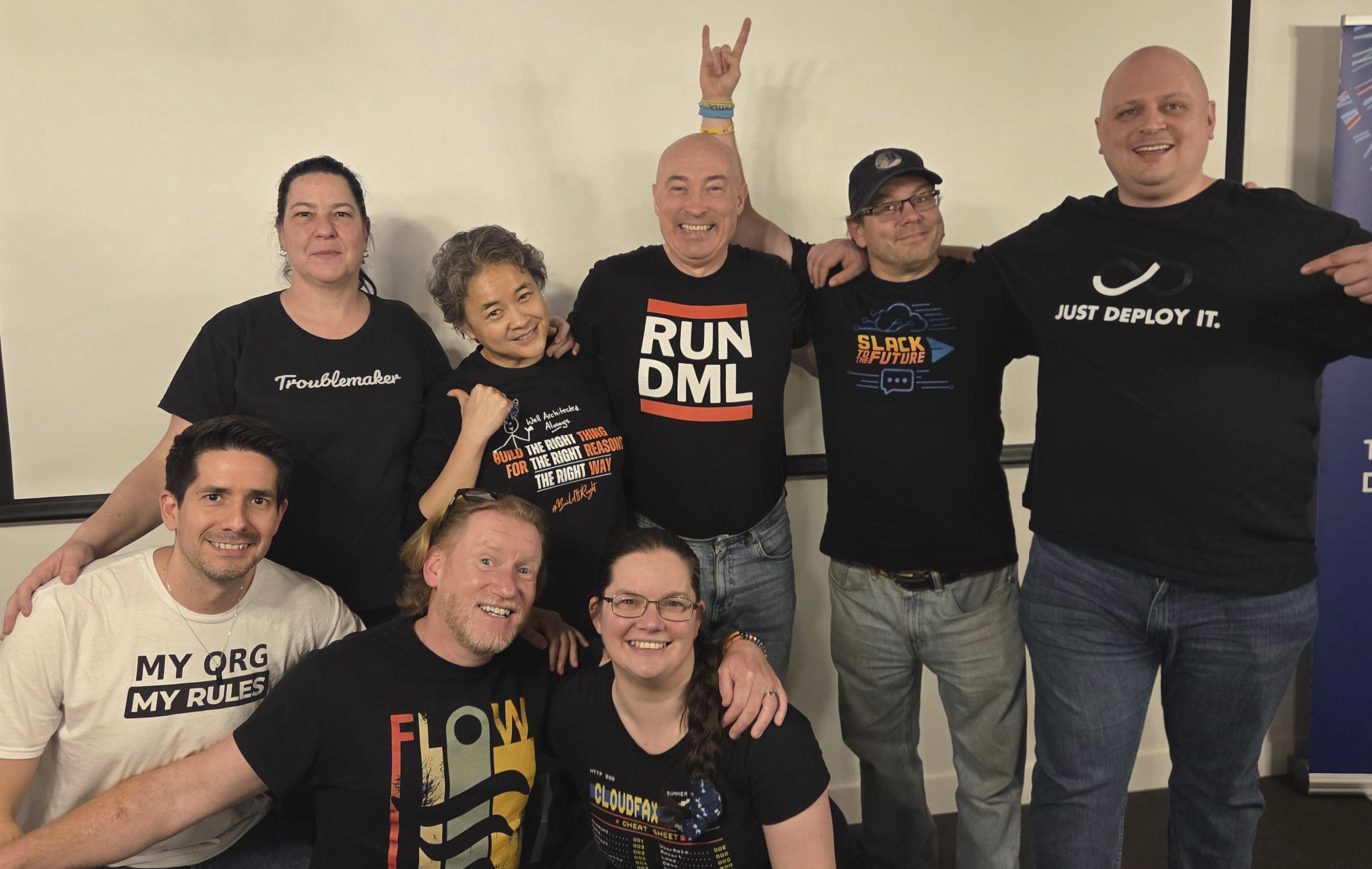
Personally - I love the 'Troublemaker' and 'My Org My Rules' ones!! 😍
PeiItForwardChallenge returns!
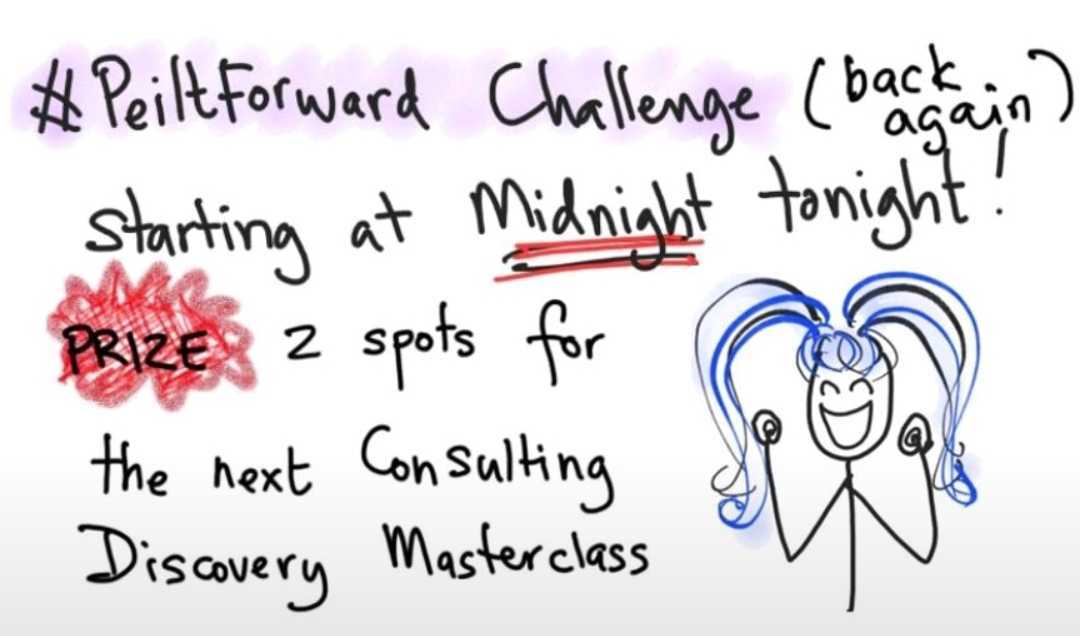
Alsooooo drumroll 🥁🥁🥁... iiiiit's back!
To win your spot, you'll need to:
👉🏻 Rack up Trailhead points during the competition window 💪🏻
👉🏻 Show your ohana spirit - add value to the ohana and the wider community by doing good ❤️ and don't forget to use hashtag#PeiItForwardChallenge so I can track you down!
Just in case you didn't know what it's about the Masterclass covers the stuff nobody teaches you in certs:
🍩 How to run a proper discovery
🍩 How to ask questions that actually get you answers
🍩 How to map a process without losing the plot
🍩 How to write requirements people understand how to build and test
🍩 How to manage stakeholders without losing your mind
Competition deets here: https://www.zenhao.co.uk/peiitforward-challenge-cdm BUT you can also lock in your spot (if you don't have time to do the badges) over here: https://www.zenhao.co.uk/Salesforce-Consulting-Discovery-Masterclass
You still have time to rack up those points!!
Righty-ho, that's all for now.
Wrapping this issue up on change management and adoption for volunteer organisations, and riffing off my #BuildItRight tag - you'll want to:
Build the right change.
For the right people.
In the right order.
😉
I really should be in marketing (NOT!) 😆
Anyway, see you next week.
x Pei 💜
P.S. If you love this newsletter please forward to your friends and colleagues and get them to subscribe here. 🥰

Responses